A place for everything
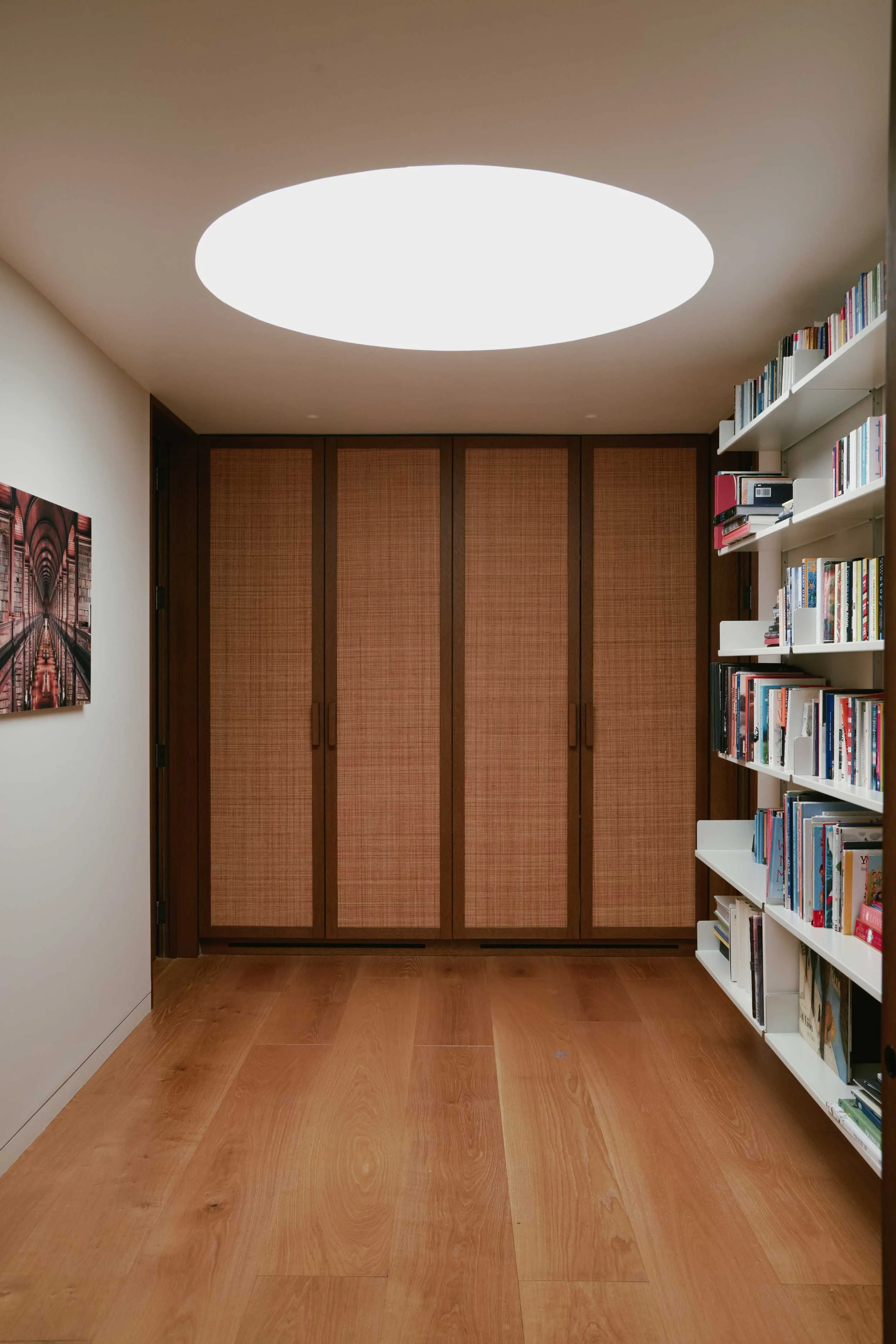
A home has to find room for an extraordinary range of things. The electrical distribution board. Winter coats. Spare linen. A vacuum cleaner and its various heads. Suitcases. The children’s outgrown clothes, kept just in case. Christmas decorations for eleven months of the year. A set of cross-country skis. Most of these have one thing in common: almost no thought is given to where they will live until the day they arrive and need putting somewhere.
So they end up colonising the rooms meant for living. The bulky, the seasonal and the purely practical spread into the spaces you actually wanted to enjoy, and the home starts to feel fraught in a way that is hard to name. It is rarely the fault of the stuff. It is almost always the fault of there being nowhere sensible to put it. Storage is the least glamorous part of designing a home, and one of the few that most decides whether the finished house feels settled or slightly besieged.
Storage is designed, not left over
The most common mistake is to treat storage as something fitted in at the end - a cupboard put wherever there happens to be space left over once the good rooms are drawn. The trouble is that space left over is rarely space you need. You end up with a deep cupboard in an awkward corner and nothing at all by the door where the coats actually come off.
Storage works when it is part of the brief from the beginning, considered alongside the rooms rather than after them. Early on, it is worth taking a genuine inventory - not a vague sense that you will “need some storage”, but an honest look at what you own, what you use daily, what you use once a year, and what you are keeping for reasons you may want to question. That list, unglamorous as it is, shapes a home as much as any decision about light or materials.
Not all storage is the same
The second thing worth understanding is that storage is not one thing. A home needs several quite different kinds, and the skill lies in matching the thing to the right sort of space.
What you reach for every day - coats, shoes, keys, bags - wants to be shallow, open and close to where you use it, usually near the entrance. Put it behind a door at the back of the house and it simply will not be used; the coats will go over a chair instead. What is bulky and seasonal - suitcases, the Christmas boxes, the skis, the spare bedding - can afford to be deep, high, and genuinely out of the way, because you only visit it a few times a year. And the great mass of everyday belongings in between wants to be easy to see and easy to reach, because storage you cannot see into is storage you forget you have.
Getting this right is quietly transformative. A hallway with somewhere proper for coats and shoes is a different hallway. A kitchen where the everyday things are within reach and the rarely-used things are stored deep is a calmer place to cook. Much of what makes a well-designed home feel effortless is simply storage matched correctly to the life going on around it.
How much is enough
Almost everyone underestimates how much storage they need. It is one of the most consistent things I see: a plan that looks generous on paper turns out, once a family and its possessions have actually moved in, to be a little short everywhere. Belongings accumulate quietly over the years - a life gathers things - and a home designed only for what you own today will feel tight before long.
The useful discipline is to plan for the home you will have in a decade, not just the one you are moving into. Err on the side of a little more than seems necessary, put the generosity where life changes most - the growing family, the hobbies that come and go, the things you cannot yet predict - and the house will go on fitting you rather than quietly running out of room. It is the same instinct that makes storage worth building to adapt: the needs you are designing for are moving targets.
The things nobody plans for
There is also a category of storage that almost never makes it into the conversation until it is too late: the hidden infrastructure of the house. The consumer unit - that electrical distribution board - the meters, the boiler, the broadband router and its trailing cables, the ventilation kit. None of it is beautiful, and all of it has to go somewhere.
Left unplanned, these things surface in the worst possible places - a distribution board on the one clear wall in the hall, a router blinking on a shelf in the living room. Planned for early, they disappear into a services cupboard or a run of joinery and are never thought about again. It costs almost nothing to decide where they go at the design stage, and a surprising amount of visual peace to have done so.
Built in, or built to adapt
Broadly, good storage takes one of two forms, and most homes use both.
The first is bespoke joinery - storage built into the fabric of the house, tuned exactly to the space and to what it has to hold. It makes use of the awkward volumes other approaches waste: the slope of a loft conversion, the void under a stair, the depth beside a chimney breast. Done well, it stops reading as furniture and starts reading as part of the building, which is usually when a room feels most resolved.
The second is an adaptable system - freestanding storage designed to be added to and rearranged over time, rather than replaced. VitŜœ’s 606 shelving system, designed by Dieter Rams in the 1960s, is the example most people reach for: a modular system you can extend, reconfigure and carry from one home to the next across decades. The point is not the brand but the principle. Where your needs are still changing - a growing family, a home that is not yet settled - storage that can change with you is often wiser than storage fixed permanently in place. The best of it is built to last precisely because it is built to adapt.
Clutter is a design problem
It is worth saying plainly, because it runs against how most of us think about it: clutter is rarely a sign of owning too much, and almost never a failure of character. It is usually just belongings with nowhere to go. Give everything a sensible place and the same quantity of possessions stops being clutter at all - it is simply put away.
This is the real argument for taking storage seriously. When the ordinary business of a life has somewhere to live, the rooms are free to be quiet. The clear surfaces, the uncluttered floors, the sense of ease that people admire in a well-designed home are not the result of owning less. They are the result of storage that was thought about early and matched carefully to the way the household actually lives. Storage is what lets the rest of the design breathe.
Putting away is not the only answer, though, and it is worth being clear about that. Some things earn their place in the open - the books, the worn table, the objects a life collects and is the better for showing. Good storage is as much about deciding what deserves to be seen as what is better out of sight, and the skill is knowing which is which. That judgement is worth more than it has room for here - I have written separately about the two kinds of calm a home can have: the one reached by concealing, and the one reached by composing with what is on show.
From a London terrace to a house in the mountains
None of this is particular to one kind of home. In a Victorian terrace in north London, it is the understairs void turned into proper shallow storage, the dead corners of a loft conversion fitted out rather than lost to the slope, a utility that takes the washing and the vacuum cleaner so the kitchen does not have to. In a house in the mountains, it is a boot room that can absorb wet ski gear, snow boots and outdoor layers before they reach the living space, and deep stores for the equipment a life outdoors accumulates.
The particulars change with the place and the life. The principle does not. A home that works is one where everything - the beautiful and the entirely practical alike - has somewhere it belongs.
Plan storage early, match it honestly to how you live, and the rooms you care about are freed to be exactly what you wanted them to be. Get it wrong, and no amount of good design elsewhere will quite make up for it.
If you are planning a home and want it to work as well as it looks, please get in touch here.