A pause at the door
Why arriving home should be something you move through, not simply something you do
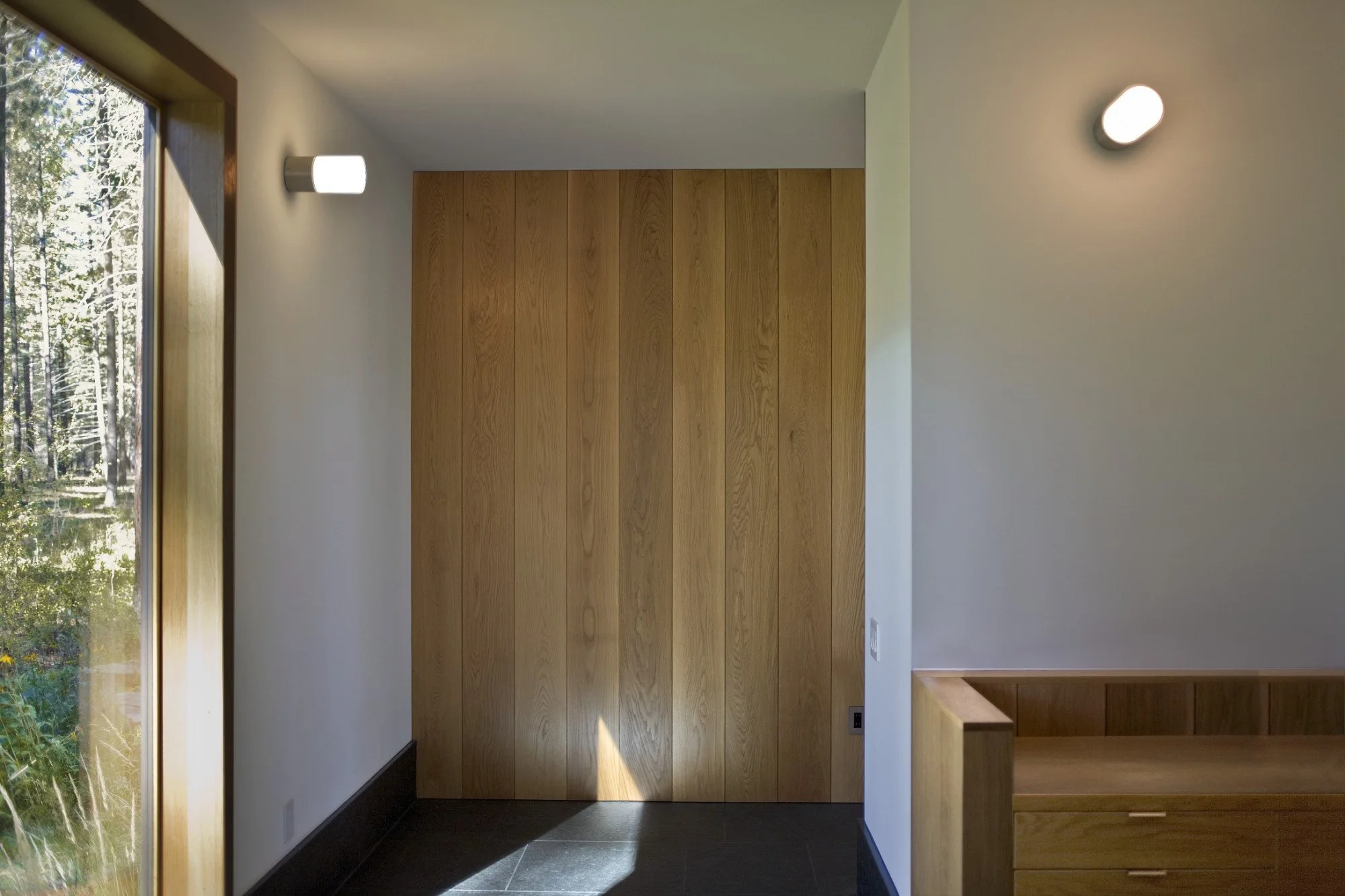
You arrive home and step through the front door. Beyond the hall, you know, is a view you love - a Japanese maple, deep red this autumn, framed by the glass at the back of the house. But you cannot see it yet. Not quite.
Instead you are held, for a moment, in a modest and quieter space. It is a little darker than outside, and sized for you and the few things you need when you come and go. Light washes gently down one wall from above. There is a small framed view of the world outside, and on the console the late sun catches a familiar object you have watched in a hundred different lights over the years. You put something down. You breathe out. You are home.
You did not simply go from outside to inside. You moved from one world into another - and the house gave you a space in which to make that move. That space, the threshold, is one of the quietest and most overlooked parts of a home, and one of the most important to how it feels to live in.
More than a way in
Entering or leaving a home is not really a change of location. It is a change of state. You arrive carrying the day with you - the street, the journey, whatever you were just doing - and you need a moment to set it down before you are properly home. You leave in the other direction, gathering yourself to step back out into the world. A threshold is the space that lets those transitions happen, instead of flinging you straight from the pavement into the heart of the house, or out of it.
It does practical work, of course. It is where the coat comes off, the parcel goes down, the umbrella drips, the keys are set. But its deeper work is on the mind. A good threshold gives you the beat you need to slow down and change register - to stop being a person arriving and become a person at home. We rarely notice it when it is there. We feel its absence sharply when it is not.
A smaller delight, held before the larger one
A threshold is not an empty or a withholding space. It should offer you something - something to arrest or delight you as you arrive. But it need not be the big view of the garden, and often it is better that it is not. A shaft of sky through a rooflight. A glimpse through into a room full of light beyond. A small, carefully placed window onto something outside. An object in the changing daylight. These are quieter pleasures, intimate rather than sweeping, and they suit the moment of arrival - when what you want is to settle, not to be swept away.
The larger view is better held back. It is tempting to frame the best view of the home as the first thing you see when you enter, but in most cases it is a finer experience to arrive and settle before the house opens up and sweeps you into it. Held back a little, the view is more powerful when it finally arrives. Given away at the door, it has nowhere left to go.
Keeping in touch with the world outside
A threshold also keeps a home in contact with the world around it, rather than sealing it away. Crossing it, you feel the change - the drop in temperature, the shift in light, the sound of the air, the particular quality of the season on that particular day. A deep porch, a covered edge, a sheltered step all hold you for a moment in the open before you are fully inside, so that coming and going keeps you in touch with the weather and the day.
That contact matters more than we tend to notice. Being in touch with the natural world, even briefly and even at the edge of the house, settles something in us. A home that keeps that connection alive - that lets you feel the season turn as you pass through its edges - is a calmer and more grounding place to live than one that shuts the outside firmly out. The threshold is where the home meets the weather, and keeping that meeting present is part of what makes a home restful rather than merely sheltered.
A threshold made of layers
At North Bank, in the Methow Valley, the threshold is handled not as a single step but as a sequence - a series of layers that eases you from the wild outside toward the settled inside.
The approach to the house is made through earth ramps built in corten steel trays and seeded with native understory planting, so that walking up to the door you are already among the plants of the forest floor. The landscape is not kept at arm's length and then crossed in one step; it is drawn right up to the building and allowed to come with you. Then, held within the volume of the house itself, are screened porches - spaces that are neither fully inside nor fully outside. Sheltered by the roof and contained by the building, but still open to the air, the light and the sound of the forest, they are the most important threshold in the house: the place where the sharp line between living inside and being out in the landscape is deliberately softened into something you pass through gradually.
You do not step from the forest into the house. You move inward through layer after layer - the planted ramp, the screened porch, the quiet interior - each one easing you a little further from the wild and a little closer to home. Leaving, the sequence runs the other way, preparing you gently to step back out.
Why the gradual beats the abrupt
The modern instinct often runs the other way: to fling the front door straight onto the finest view, or to dissolve the whole rear wall into frameless glass so that inside and garden become one continuous, undifferentiated space. There is a drama to that, and on first sight it can be breathtaking.
But drama is quickly spent, and a home is lived in every day. The breathtaking reveal that stops you on your first visit becomes, by the hundredth, simply the way the house is - while the quieter gift of a good threshold, the pause and the settling, goes on giving something back every single time you come and go. A frameless glass wall erases the threshold between inside and out; a considered one keeps it, and with it keeps the moment of transition that lets you feel you have arrived somewhere. The aim is not to withhold, but to calibrate - a smaller delight at the door, the larger one held until you are ready for it, and a real edge between the home and the world rather than no edge at all.
Arriving, and leaving, well
A home you enter and leave through a proper threshold is one that lets you arrive, settle and depart as real transitions, in touch with the world outside - rather than being flung in and out of your own front door. It is a quieter and more grounding way to live, and most people feel it even when they could not say why.
Consider your own home for a moment. How do you slow down when you arrive? Is there a space that lets you cross from one world into the other - or are you simply thrown straight in?
If you are planning a home and would like to think about how it welcomes you in and sees you out, please get in touch here.