Built to last
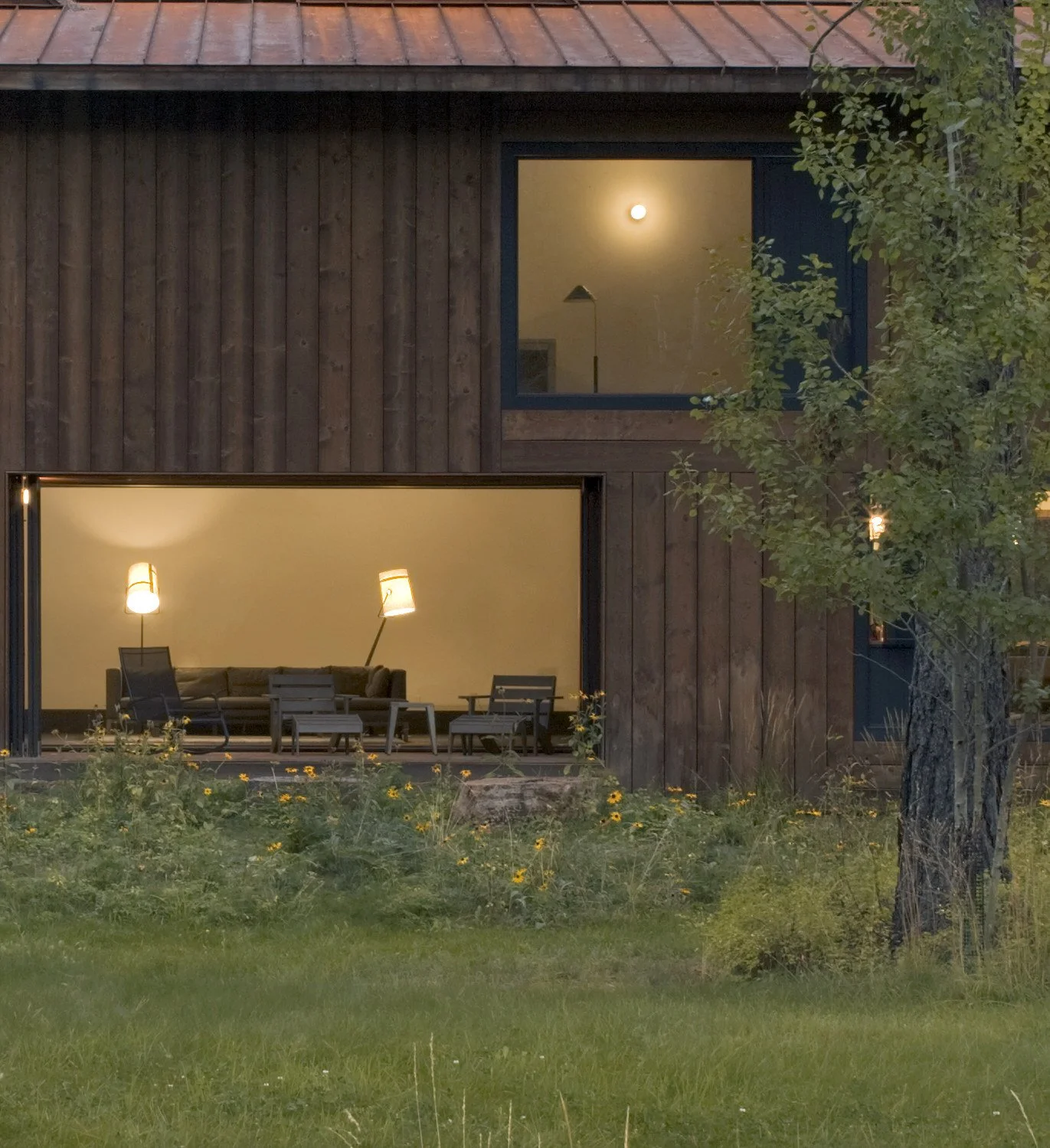
A house can be soundly built - dry, solid, nothing needing replacement for years - and still feel tired to live in. We rarely say so, because "built to last" almost always means the first part: the roof that does not leak, the materials that do not rot, the finishes that do not date within a season. That matters, and it is the right place to start. But it is only half of what lasting really means.
That other half is harder to measure and, over time, worth more. It is whether a house still feels right to live in years after it is finished - whether it has aged into itself rather than merely survived. The ways it can fall short are familiar: a layout that no longer suits how the family lives, a run of finishes that date the moment a fashion passes, rooms that were never quite comfortable to be in. Standing is not the same as lasting. The most successful projects I have worked on were built soundly, and designed so that the soundness has something worth protecting.
Two kinds of lasting
It is worth separating the two, because they are looked after in different ways. The first kind is physical: will the building keep the weather out, and keep its materials sound, across decades rather than years? That is a question of good material choices and careful detailing. The second kind is harder to point at: will you still want to be in the house? Will the plan still work, the light still feel generous, the rooms still settle you when you come home? That is a question of proportion, restraint and judgement.
Get only the first right and you have a durable building that nobody particularly loves. Get only the second right and you have a beautiful house that quietly falls apart. The aim, always, is both at once - and the two are more connected than they first appear, because a house you go on loving is a house you go on looking after.
A house in a demanding place
Some years ago I designed a house in the Methow Valley, in the mountains of Washington State, not far from the small town of Mazama. It sits in a clearing among tall conifers, close to the river, and it is a demanding place to build. Winters bring heavy, sustained snow; summers are dry and fierce; the swing between the two is enormous, and the nearest help is a long way off. A climate like that is unsentimental. If a detail is going to fail, it will find it.
More than a decade on, the owners tell me the house still looks and feels timeless. That is the sentence I think about most when I think about what lasting means - not that nothing has ever needed attention, but that the house has held its character while the years and the weather did their work. A place that testing is a good place to prove an idea, precisely because it forgives nothing. And the decisions that kept that house right are the same ones I come back to everywhere, including on a terrace in north London.
Materials chosen to age, not to fight time
A great deal of durability is decided in the choice of materials, and the most useful question to ask of any material is not how it looks on the day it goes up, but how it will look in ten years.
The house is clad in timber - but not raw timber left to silver on its own. Left fully exposed, natural boards weather unevenly: bright where the sun hits hardest, dark and green where damp sits, so that within a few seasons a wall can read as patchy and neglected. We used a pre-weathered board instead, set out as a reverse board-and-batten, so that it begins close to the colour it will keep and softens evenly from there. It was a decision about the next decade rather than the first afternoon.
The roof is standing-seam metal, chosen for the same reason from the opposite direction. Rather than resist weathering, it takes it on: the surface patinates slowly to a warm, settled tone that sits easily against the timber and the forest behind. A material allowed to change gracefully will nearly always outlast one that is asked to stay looking new.
The boards themselves were set out with some care - run long and horizontal below the windows, vertical elsewhere, with joints staggered and the strong horizontal lines kept deliberately quiet. In a landscape that dramatic, the house earns its ease by being grounded and unfussy: a steady, low presence among tall trees and sharp light, rather than another thing competing for attention.
Protecting the building
Materials only last if the building looks after them. A good deal of what keeps a house sound is not the material at all, but the way it is sheltered and detailed.
Here the roof overhangs are generous - wide enough to throw snow clear of the walls and the doors, and to shade the glass from the worst of the summer sun. The building is lifted slightly off the ground, a straightforward response to deep snow that also keeps the timber away from standing damp. The approach to the front door crosses shallow corten-steel trays seeded with native understory, and passes through a screened porch set within the volume of the house - a sheltered threshold between the openness outside and the rooms within.
None of this is dramatic. It is the ordinary, careful work of keeping water, snow and sun where they belong. But it is usually what decides whether a house is still sound in twenty years or quietly failing at its edges, and it almost never shows in a photograph.
The quieter kind of lasting
If the materials and the detailing look after the first kind of lasting, the second kind - whether a house still feels right - comes from somewhere harder to name. It comes from proportion, from light, and above all from restraint.
The forest that makes the setting beautiful also makes it dark, and side windows alone would never have been enough. So the light is brought in from above, through skylights placed where the rooms need them, and the interior is kept light in tone so that whatever daylight arrives is carried deep inside. A house that is comfortable to be in through a long winter is a house you go on wanting to be in - and wanting to be somewhere is its own kind of durability.
More than anything, the house was kept simple. Not plain, but reduced to what it needed: clear ideas, well-proportioned rooms, nothing added for its own sake. Simplicity of that kind is the most durable quality a house can have, because there is nothing in it to date. Fashion attaches itself to excess - the clever feature, the of-the-moment finish, the detail that was interesting once and is merely dated now. Take those away, and what remains - good proportion, natural materials, light handled well - does not go out of style, because it was never in style to begin with.
The long view is usually the economical one
There is a cost argument in all of this that is easy to miss at the outset. The cheapest option at the point of building is rarely the cheapest option over the life of a house. Finishes that date get ripped out and redone; materials that were never meant to weather need replacing; details that were not properly resolved fail, and failures on a building are expensive to chase down after the fact.
Measured over the years you actually live in a home, the durable choice is often the economical one, even when it costs a little more to begin with. Building to last is not about spending more - it is about spending with the whole life of the house in view, rather than only its first year.
Not only for remote places
A house in the mountains makes the argument vividly, because the climate is so testing and the setting so bare. But none of it is particular to the Methow Valley. The same thinking shapes a refurbishment in Crouch End or an extension on a Victorian terrace: choosing brick and finishes that will weather well rather than look showroom-fresh for a single season, detailing the junctions so water goes where it should, bringing in light that keeps a room comfortable for years, and keeping the design clear enough that it will not feel wrong when the next decade arrives with its own ideas.
Building to last, in the end, is not a style or a budget bracket. It is a way of making decisions - each one taken with an eye on how the house will be, and how it will feel, long after the work is finished.
The real measure of a home is not how it looks when the scaffolding comes down. It is whether, years later, it still keeps the weather out, still suits the life inside it, and still feels like somewhere you want to be. That is what I try to design for on every project - in the mountains, or on a quiet street in north London.
If you are planning a home and want it to last - in both senses - please get in touch here.