Designing with Constraint in Mazama
Reflections on wilderness architecture from a London practice working in the United States
Pierre Maré Architects works on residential projects in London and in the United States, including in the Methow Valley in Washington State. Life in wilderness environments can conjure up ideas of freedom compared to city life, but the force of nature quickly makes limitations apparent. Urban environments are governed by planning, setbacks and zoning requirements. Rural life includes this, as well as the forces that have kept these areas untamed. Snowfall settles, limits access, and the melt lingers into spring. Forest canopies filter light. Summer brings heat and dry conditions and the quiet awareness of fire. Any design decision needs to start with technical hurdles rather than form or aesthetic considerations.
It reinforces a simple idea that constraint is something to work with rather than overcome. The architecture that emerges here is shaped by attentiveness and awareness of what the land will allow and what it quietly resists. This place rewards restraint, patience and clarity over excess or bravado.
Designing Begins with Limits
In many contexts, the design process starts with opportunities: maximising floor areas, capturing views, exploring forms. In Mazama, located in Okanogan County deep in the North Cascades, you need to start your process from the other end and consider the clear environmental boundaries before any design aspirations.
Snow management, forest density, seasonal light and wildfire awareness create a strong context that shapes daily life, whether anything will survive the seasons to come. Ignoring these factors does not create freedom but fragility.
The design process here requires respecting the context and recognising that including every design aspiration may not be possible, but that there may be opportunities within the constraints.
Reading the Terrain Prior to Drawing
Time on site matters. Walking the land at different times of day, noticing where snow lingers longest, where the forest opens slightly, where the ground feels more exposed or more sheltered. These observations are rarely dramatic, but they are cumulative.
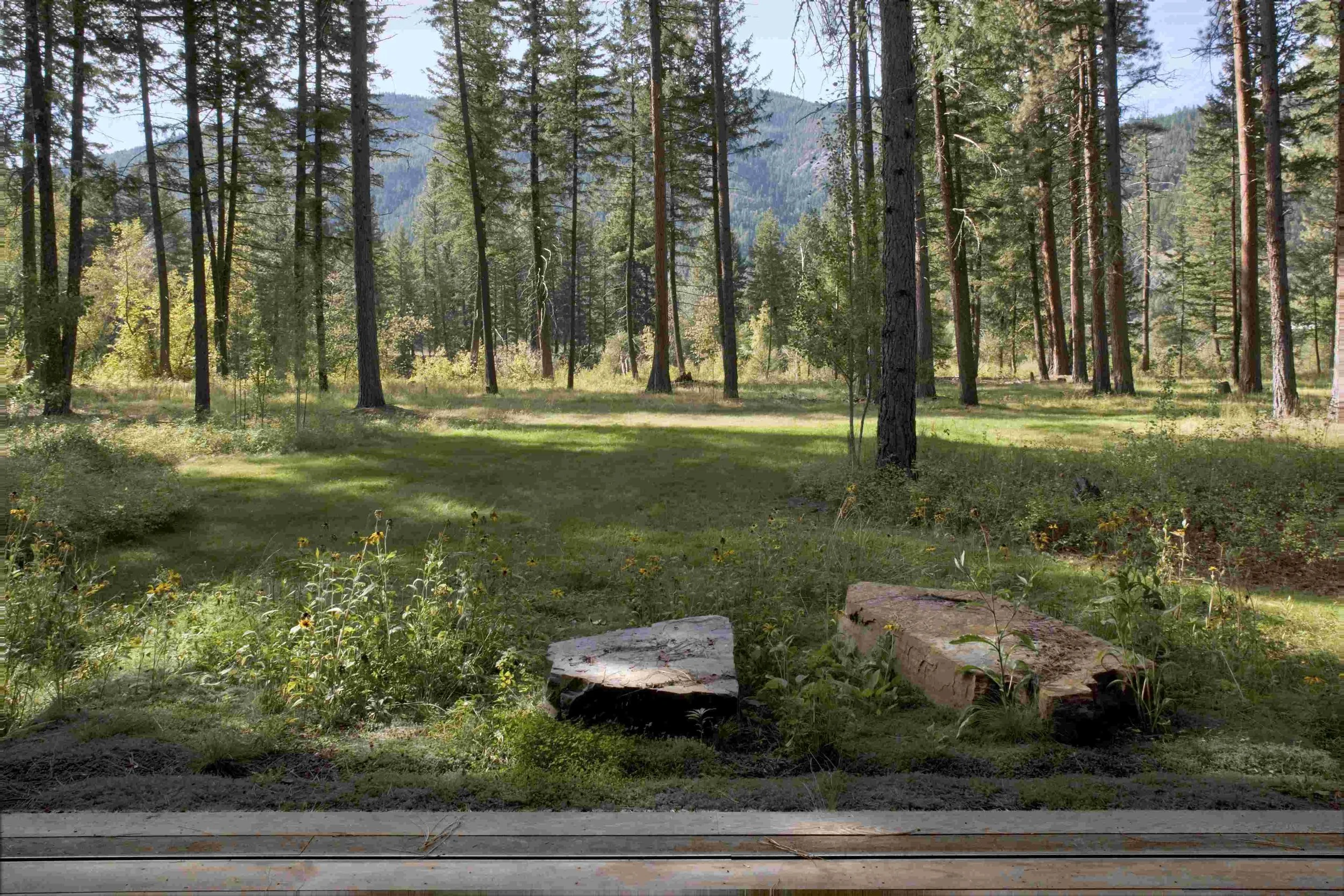
In the Methow Valley, the forest establishes a distinct rhythm. Trees define clearings, shadows, and movement. Building placement becomes less about asserting an object and more about finding a quiet alignment, tucking into an edge, extending a clearing, or strengthening an existing pause in the landscape.
Equally important is recognising where not to build. Some areas feel too exposed, too dominant, or too disruptive. The first act of good design is to resist these prominent locations.
Snow as a Design Condition
Snow is a defining condition throughout all seasons. Not only do all building components show the response every day, but the spatial management of snow clearing and removal also defines thresholds between spaces, buildings and movement areas.
The roof is usually the most expressive element in these buildings, but the form should emerge from a strategy for snow accumulation and shedding rather than from visual preference. The most predictable way to manage snow is to use simple geometry. Complex roof forms can collect snow in awkward ways, increasing structural demands and unsustainable maintenance requirements.
Access and snow removal areas are also priorities to consider, as you need more space for snow accumulation while maintaining clear access for pedestrians and vehicles.
Once the snow has settled to a depth, the perception of buildings changes. The ground plane rises, and proportions change. Good architecture remains calm and legible even when partially buried. It is not obscured by it but remains legible and can be interpreted through the snow. Everything is reduced to the essentials, making the visible even more important.
Light in a Dense Forest
Natural light in Mazama is rarely uniform. It arrives diffused by pine canopies, reflected off snow, or angled low across winter ground. Designing for light is therefore not about maximising glass, but about carefully receiving light.
Openings are placed to capture instances rather than flood spaces. Shafts of winter sun can reach deep into an interior. Clerestory windows can bring in top light or light from another orientation. A room can be lit naturally with a framed view rather than oversaturating it with a wall of glazing that removes any perception of depth created by the contrast between lit and unlit surfaces.
Roof overhangs and covered terraces add control over the quality of light entering the interior, as well as over heat gain during the summer months. Together with the tree canopy overhead, the high summer sun can be softened and filtered into the interior, creating a balance of brightness and shade. This helps rooms feel calm rather than exposed. Here, light is something that you notice and enjoy, not something you take for granted.
Orientation as Relationship
Building orientation in the Methow is complex. Although south-facing exposure will create the most heat and light when needed, it also brings glare, snow-melt areas, and potential overheating. East- and west-facing windows offer softer morning and evening light as well as greater richness and depth, but lower sun angles can quickly overheat a space and cause discomfort. Orientation in isolation rarely works, as building relationships must consider the relationship to trees, slope, neighbours, and views. Minor rotations or shifts in building plane can reduce exposure, protect privacy and align an interior space with a view beyond whether it's a glimpse of Goat Peak or sightline towards the Methow River.
These decisions are not obvious or seen in drawings or still images. They are felt over time in how the spaces feel. How rooms light up in the morning, how snow melts evenly or how a building sits quietly among the trees rather than announcing itself.
Wildfire Awareness as a Background Condition
Wildfire is not always visible in Mazama, but it is always present in awareness. A response to a wildfire needs to be accepted, but it does not need to become the driving force in building design.
There are a few key decisions to be made in how buildings are sited and their relationships to clearings. Within the actual structure, complexity should be avoided, and material choices should be restrained and selected for their fire resistance.
A calm durability is the aim. Clearings can feel natural rather than defensive, and fire awareness can be embedded in the building logic rather than become expressive. Architecture that looks anxious rarely ages well. In Mazama, confidence comes from calm preparation rather than a visual alarm.
Simplicity as a Response to Risk
Harsh climates expose complexity. The more complicated a building becomes, the more points of failure it introduces during construction, occupation, and long-term maintenance. These are not sustainable structures.
Simplicity here is a practical response rather than a visual choice. Clear volumes can be built well and understood. It is especially important to resolve details early to allow craftsmanship to focus on the execution rather than interpretation, as the uncertainty will cause long-term problems.
This sharpness supports longevity. Buildings that are straightforward to preserve are more likely to endure and be cared for over time. In a place defined by extreme conditions, simplicity and resilience go hand in hand.
Crafting Buildings That Belong
Buildings that stand the test of time in Mazama do not compete with their surroundings. They settle into place. Materials are selected to sit comfortably alongside bark, stone, vegetation and snow rather than contrast with them. These structures need to go beyond the building codes to create a lasting impact.
Graceful weathering will soften the edges and deepen the character, and buildings will feel less like new objects and more like quiet participants in the landscape.
Over time, weathering softens edges and deepens character. Buildings begin to feel less like new objects and more like quiet participants in the landscape. This process cannot be rushed, but it can be anticipated.
Architecture here acts as a frame for forest views, seasonal change, and instances of calm. When done well, the building recedes just enough to allow daily life and the surrounding environment to taked precedence.
Living with the Building Through the Seasons
Seasonal change is not something to be accommodated reluctantly; it is something the architecture sustains. Winter draws life inward. Spaces feel more intimate, sheltered, and focused. Summer extends living outward, blurring thresholds between inside and forest.
Shed roofs, Overhangs, covered patios, outdoor decks and carefully considered thresholds become essential rather than optional. These parts mediate between building and landscape, allowing daily rituals to adapt naturally as conditions change.
Architecture succeeds here when it supports these rhythms quietly, when it feels neither rigid nor reactive, but simply appropriate.
Constraint as a Source of Meaning
Working in Mazama reinforces the idea that constraint sharpens decision-making. Limits force clarity. They remove excess and reveal what really counts.
Rather than diminishing creativity, these conditions focus it. The resulting architecture feels inevitable rather than designed, less a statement, more a response.
This quality is difficult to achieve deliberately. It happens when the building is patiently shaped, with respect for forces beyond control.
Designing Quietly
Mazama does not reward architecture that seeks attention. It rewards buildings that sit comfortably within snow, forest, and time.
Designing with constraints here has reinforced my attitude towards architectural freedom when I first visited this valley in Washington State. True freedom is not found in ignoring limits, but in working carefully within them, allowing place, climate, and season to lead.
When constraint is accepted rather than resisted, architecture becomes calmer, more resilient, and more meaningful. In Mazama, that quiet alignment is not simply preferred; it is essential.
If you are thinking of building in Mazama, you may also find this useful: Thinking of Building a Home in Mazama? Start Here
If you are considering a residential project in the United States or in London, get in touch to discuss your project.