Thinking of Building a Home in Mazama? Start Here
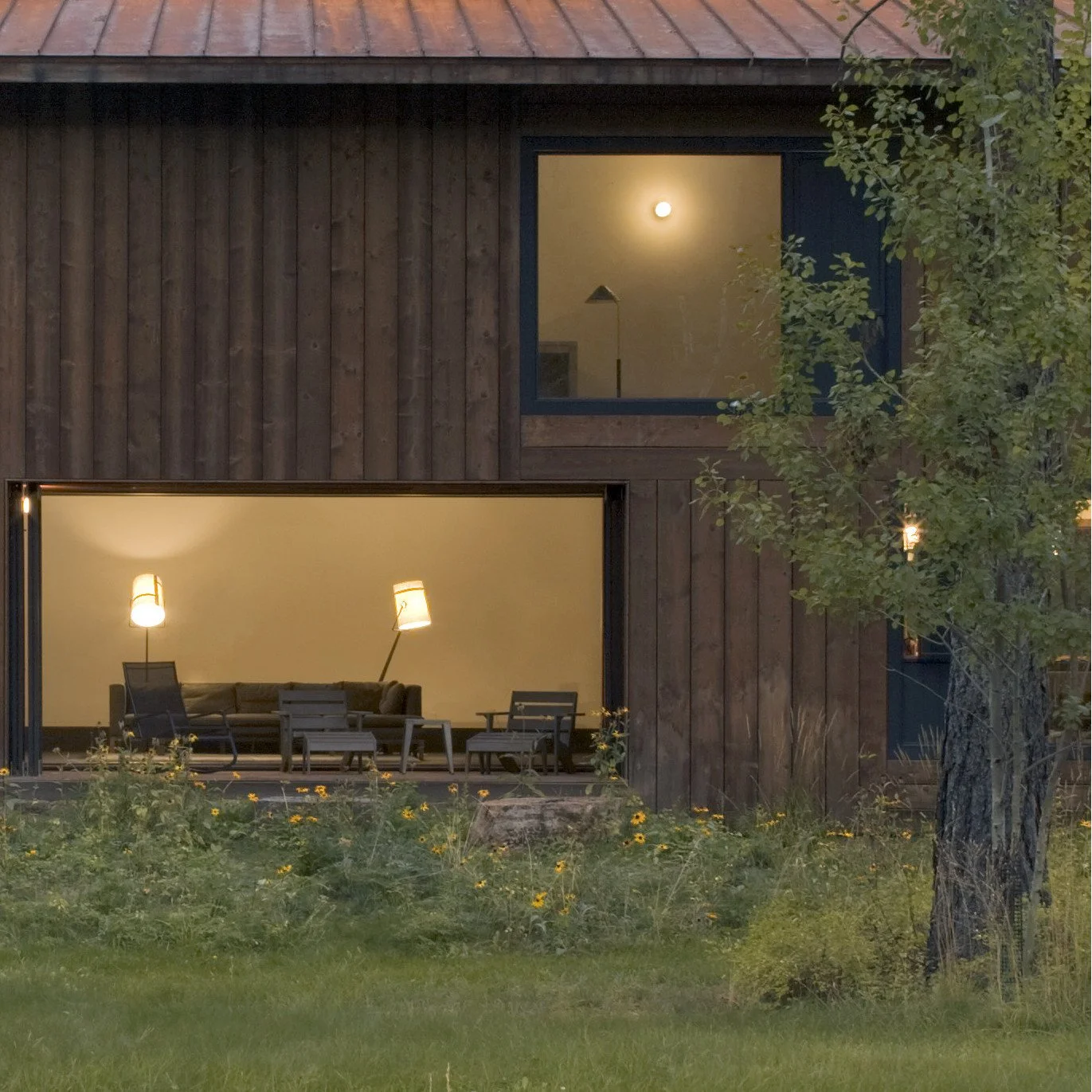
A guide to starting well in the Methow Valley - land, process, and the value of early thinking
Most people considering a home in Mazama begin by thinking about the house. How many bedrooms. What style. How much it might cost. These are natural questions, but they are not the most useful place to start.
In a place like Mazama, the land comes first. The site you choose - and what you understand about it before you commit - will shape every decision that follows. Orientation, access, fire risk, services, slope, snow, privacy, and the relationship between your plot and the landscape around it: these are the factors that determine whether a home will work well here, long before a room is drawn.
The most valuable thing you can do at this stage is not to rush toward design. It is to slow down, ask the right questions in the right order, and understand what you are working with.
I have been working in Mazama for over a decade. I designed and built the first home at North Bank, created the masterplan for the site, and have done some masterplanning work for the Mazama town centre. Over that time, I have come to understand the valley in detail - its climate, its rhythms, and what the land asks of a building. A small number of residential plots at North Bank are expected to come to market shortly. But the principles below apply to anyone considering building in the Methow Valley.
The first decisions are often about the land, not the house
Before you think about architecture, you are likely making a decision about where to build. And in a place like Mazama, that decision carries weight.
Remote and rural sites can be extraordinarily beautiful, but they come with questions that need honest answers early. What are the fire risks? Does the site have power, or will it need to be brought in? What water systems are permitted? What about septic provision? How is access - especially in winter? Is the land flat, sloped, or something in between?
These are not design questions, but they shape everything that follows. Building remotely has real advantages - privacy, landscape, space - but those advantages can come at greater cost if the site itself presents challenges that are not well understood from the outset.
For context, North Bank has straightforward access, a flat site, and services that are already in place. Not every site in Mazama offers that starting point, and it is worth understanding what your particular piece of land asks of you before thinking about the house itself.
Once the site is understood, a second set of questions begins to emerge. How much will it cost to build? Which architect is right for this kind of project? How do you find a contractor you can trust in a rural setting? What materials make sense for the climate and the landscape? These are important questions - but they are better answered once the fundamentals of the site are clear.
Before you commit, start with a conversation
If you are considering building in Mazama - whether on a specific plot or still at the stage of exploring - an early conversation can help you understand the process ahead.
The main purpose is not to begin designing. It is to help you see the full picture clearly enough that you can ask the right questions and proceed with greater confidence. Building a custom home involves many decisions, and they come in a particular order. Understanding that sequence early - what to address first, what can wait, and where the key risks sit - makes everything that follows more manageable.
You do not need to commit to a full architectural service at this stage. The goal is simply to understand your situation well enough to take the next step with clarity.
You might already have a clear picture of the house you want. Or you might have a feeling - a sense of how you want to live - without yet knowing how to translate that into a building. Either is a good place to begin.
There is no obligation attached. Some of the best projects begin with a conversation months before anything is drawn.
A focused feasibility study: the most cost-effective first step
There is a pattern in the construction industry that causes real problems. People move into design before the groundwork has been done. The brief is unclear. The site is not properly understood. Assumptions go untested. And by the time issues surface, they are embedded in a design that is expensive to unpick.
A feasibility study exists to prevent this. Think of it as diagnosis before prescription - a short, structured exercise to understand what you are working with before committing to a course of action.
It is not a design proposal. It is not a commitment to full architectural services. It is typically around eight hours of focused work, designed to test whether your brief and the land are a good fit before you invest significant time or money in design.
A feasibility study might include a review of your priorities and how you want to live, an initial appraisal of how a home could sit on the site, consideration of orientation, access, privacy, and outlook, early thoughts on scale and arrangement, and a clearer sense of the steps that would follow.
The cost is modest. The value is disproportionately high - because this is the stage of a project when the right insight has the greatest impact. Early decisions set the course for everything that follows. A misalignment between brief and site that goes unnoticed at the start becomes expensive to correct later. A feasibility study catches those misalignments early, when they are still easy to address - when they are still lines on a plan, not foundations in the ground.
The study is also designed to give you clarity and independence. The findings are yours to keep. You can use them to continue working with me, or to brief another architect if you prefer. The point is not to lock you into a process. It is to put you in a stronger position - informed, confident, and able to participate in the decisions ahead meaningfully and constructively.
Think of it as a cost-effective stepping stone. It gives you enough understanding to decide whether to move forward, what to adjust, and what to investigate further - without committing to the full journey before you are ready.
Why this early stage matters
It is tempting to skip ahead. You have found a beautiful site. You can picture the house. The instinct is to start designing.
But the early stage exists for a reason. It is where assumptions are tested quietly, before they become embedded in a design that is harder to change later. It is where you discover that the view you imagined from the living room may work better from the kitchen. Or that the slope you thought was a problem is actually the thing that gives the house its character.
The cost of early feasibility work is a fraction of the cost of correcting a false start. And it means that when design does begin, it begins on solid ground - with a brief that has been shaped by understanding, not assumption.
From feasibility to design
If the feasibility study confirms a good fit, the path forward becomes clearer.
The study informs the design brief. Concept design can begin on a stronger footing, grounded in what the site is actually asking for. From there, the process moves through more detailed design, consultant coordination, approvals, and construction planning - each stage building on the clarity established at the outset.
None of this needs to feel rushed. The best homes in Mazama are the ones where the thinking was done properly before the building began. A calm, well-structured process - from first conversation through to finished home - makes the experience better at every stage. Not just for the architect, but for you.
A home that belongs here
A good outcome in Mazama is not only about fitting a brief onto a plot. It is about shaping a home that responds to the land, the light, and the way you want to live.
The valley asks for restraint. It rewards simplicity. A house that belongs here does not compete with the landscape - it settles into it. It handles snow and sun with equal confidence. It feels as right in January as it does in July.
That kind of home does not happen by accident. It begins with the right questions, asked early enough to make a difference.
If you are considering building in Mazama and would like to talk through a site or an idea at an early stage, I would welcome that conversation. It is often the simplest and most useful first step. Get in touch here.